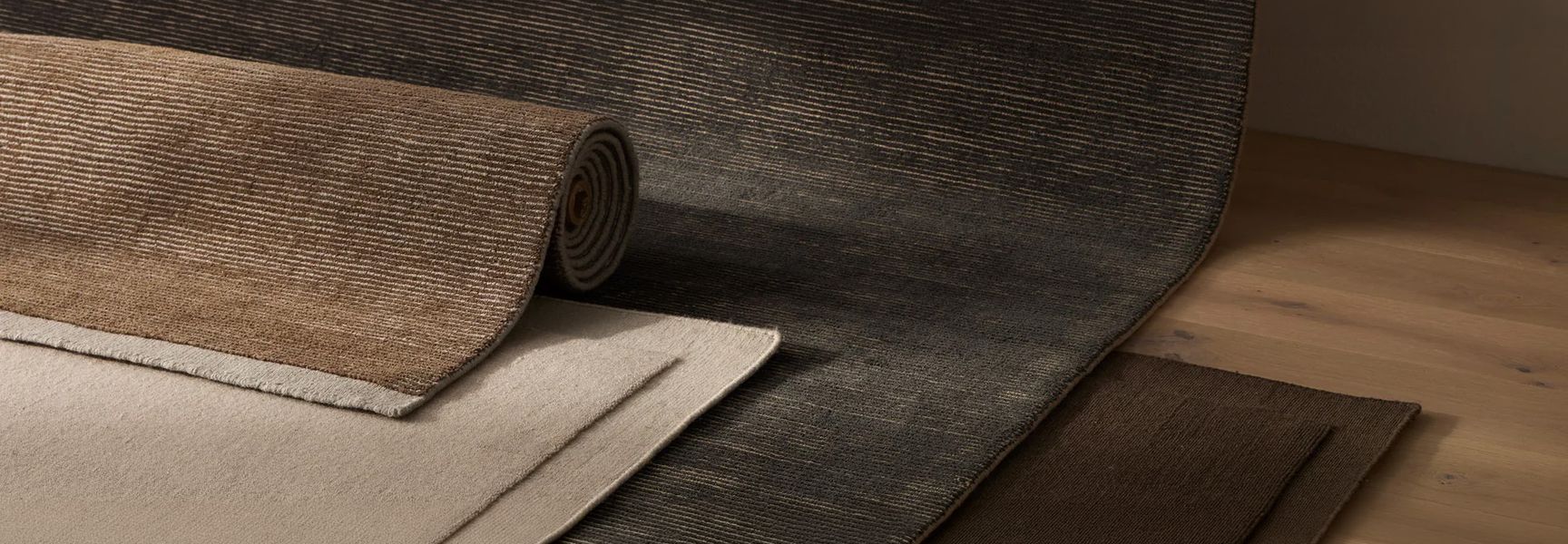
Rug Care Information
Caring for Your Rug
A beautiful floor rug is an investment in your home. With the right care, it will reward you with years of warmth, texture, and character.
Please note: Every rug we stock comes with its own care instructions from the manufacturer — always refer to the label or care booklet attached to your rug in the first instance, as these are specific to that product and its particular fibre composition. The information on this page is intended as a general guide only and covers the most common materials and care situations.
Regular, gentle care is the best thing you can do to extend the life of your rug. Vacuum at least once a week on a low suction setting, using a flat brushless head — never a rotating or turbo brush attachment, as this can damage the pile over time. Move the vacuum in an alternating pattern rather than back and forth in straight lines.
Avoid placing your rug in direct, sustained sunlight where possible. New Zealand UV is hard on natural fibres and dyes, so position rugs away from exposed windows and heat sources such as gas heaters or open fireplaces. Every six months, rotate your rug 180° to distribute wear evenly — and if your rug sits in a particularly sunny spot, rotate it more frequently.
We always recommend placing a quality non-slip underlay beneath your rug. On hard floors, it's highly recommended to stop the rug slipping. On carpet, it also helps prevent the rug from creeping out of place. An underlay reduces wear on the rug's base, protects your flooring from dye transfer and adds a lovely sense of depth underfoot.
Use felt or rubber pads beneath the legs of heavy furniture to prevent the pile from being permanently flattened. Never drag furniture across a rug. Always lift and carry it, or use furniture sliders.
Wool, Cotton & Jute
Act quickly with any spill — blot gently with a clean, dry, colourless cloth or paper towel, working from the outside of the spill inward. Never rub, as this pushes the stain deeper and can permanently damage the pile. For general spots, a little warm water is usually sufficient; for oilier spills, use a WoolSafe-approved detergent diluted in warm water. If a stain persists after your initial treatment, contact a professional rug cleaner promptly. Avoid bleach, oxy-based cleaners, alkaline products, and dry powder cleaners — these can cause irreversible damage to natural fibres. For wool and linen blend rugs such as the Baya Mayfair, use as little liquid as possible when spot cleaning — linen can stiffen if over-wetted. The same general approach applies: blot immediately, minimal moisture, and call a professional if the stain persists.
Viscose & Bamboo Silk
These luxurious fibres require extra care. Do not use water, liquid cleaners, or any home cleaning product directly on a viscose or bamboo silk rug — moisture can cause yellowing or permanent staining. Blot any spill immediately with a clean dry cloth to absorb surface liquid, then arrange professional dry cleaning as soon as possible. Felt furniture pads are recommended beneath furniture legs, as these softer fibres are more prone to indentation.
Outdoor & Synthetic Rugs
Our outdoor rugs are crafted from recycled PET yarn — a resilient, eco-conscious fibre that is far more forgiving to clean than natural-fibre pieces. A blast with the garden hose is usually all that's needed — no detergents required for general cleaning. For stubborn marks, a mild non-bleach soap can be used; rinse thoroughly and allow to dry fully before rolling for storage. Roll your rug up during off-peak seasons to extend its life, and rotate it periodically to minimise uneven UV fading.
The golden rule: blot, never rub — and act immediately.
Scoop or scrape up any solid matter first, then blot liquid residue with a clean, dry, colourless cloth, pressing firmly to absorb as much as possible. Place a folded wad of absorbent material over the area with a heavy book on top to draw moisture upward, and leave for around ten minutes.
For water-based spills (wine, juice, tea, coffee, soft drink) — dilute with small amounts of lukewarm water and continue blotting until no more colour transfers. For oil-based spills (gravy, cream, makeup, ice cream) — treat with a WoolSafe-approved detergent in lukewarm water, then dilute with clean water and blot again. Finish either treatment with a light mist of one part white vinegar to eight parts water over the affected area, cover with a dry cloth, and leave for up to 24 hours.
For highly coloured spills — paint, nail polish, lipstick, food dye — do not attempt to treat these yourself. Contact a professional WoolSafe-approved rug cleaner as soon as possible.
Pop-Ups
A pop-up is simply a loose thread end that has worked its way to the surface as the rug settles in — completely normal in handwoven rugs and not a fault. Gently push it back through the weave, or carefully trim it to the height of the surrounding pile with small sharp scissors. Never pull or yank a loose thread, as this can cause permanent damage.
Shedding
New rugs made from natural fibres — particularly wool — will shed loose fibres during the first six to twelve months. This is entirely normal. Regular gentle vacuuming is the best way to manage it, and the more consistently you vacuum in the early months, the sooner it will settle.
Professional Cleaning
Aim to have your rug professionally cleaned every 12 to 18 months — or more frequently if you have pets, young children, or a high-traffic area. Always look for a WoolSafe or Woolmark-approved cleaner for natural-fibre rugs. For viscose and bamboo silk, specialist dry cleaning is essential. A protective treatment such as MicroSeal or Fibre ProTector, applied by a specialist, can also significantly improve your rug's resistance to staining and sun fade — ask our team for more information.
If you need to store a rug, roll it — never fold it — to avoid permanent creasing.
Store in a dry, well-ventilated space. Avoid damp or enclosed areas, which can encourage mould and fibre damage.
Keep rugs dry and away from dark, confined spaces such as tightly beneath furniture for extended periods.